

























Comparing WYSIWYG Editors: What to Look For in 2026
In 2026, a โgoodโ editor isnโt just about bold text and hyperlinks anymore. It sits right at the heart of your application, powering content, shaping user experience, and even influencing performance and security. If you choose the wrong one, it can slow down your app, frustrate users, and open doors to vulnerabilities. But the right […]
Visual HTML Editor vs. Manual Coding: When Developers Need Both
In reality, developers donโt need to pick sides between manual coding and visual editing. Modern applications rely on both. Manual coding gives you full control over structure, logic, and performance, while a visual HTML editor enables fast, flexible content creation without touching code. The right approach depends on what you’re building, who manages the content, […]
Adding a React WYSIWYG Editor: Step-by-Step Guide (2026)
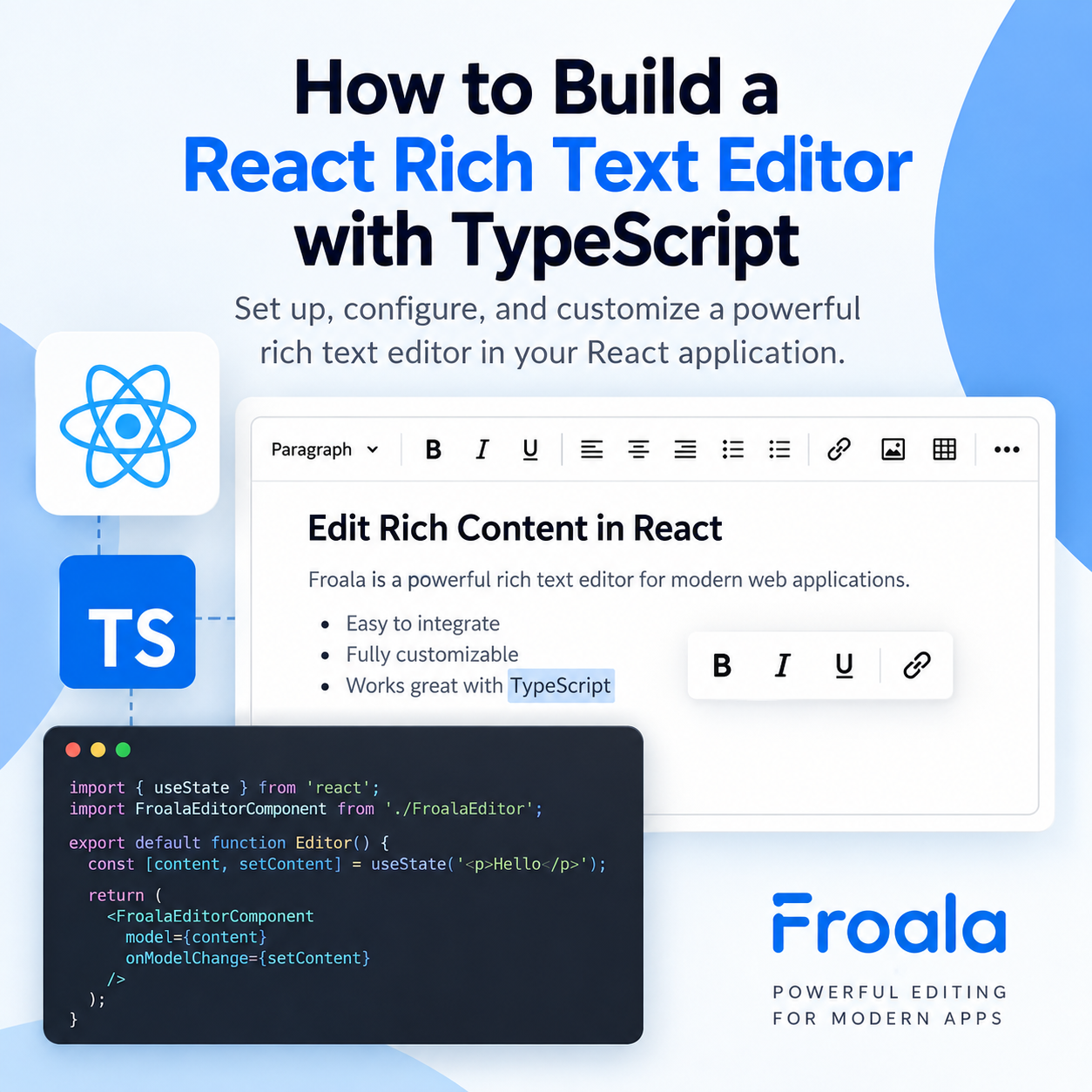
Building a rich text editor from scratch with the contenteditable attribute can be tricky. What starts as a simple feature can quickly turn into a messy problem. You may encounter browser issues, cursor behavior issues, and messy HTML output. Thatโs why most modern apps use a React WYSIWYG editor. It handles the hard parts, so […]
How to Use an Online JavaScript Editor to Prototype Faster
For most developers, the โblank pageโ isnโt the real problem; itโs the environment setup. Spending an hour configuring dependencies just to test a 15-minute UI idea slows everything down. Thatโs where an Online JavaScript editor changes the game. Instead of setting up a local dev stack, you can jump straight into prototyping. This is especially […]
The Performance Benefits of a Lightweight React WYSIWYG Editor
When teams evaluate a React WYSIWYG editor, the conversation usually starts with features. Toolbar options. Plugins. Formatting flexibility. But in 2026, thatโs not where the real decision is made. The real question is this: What is this editor doing to your performance, and what is that costing your business? Because in modern React applications, especially […]
Evaluating Enterprise HTML Editor Software for Your Current Tech Stack
Choosing an HTML editor for your product is one of those decisions that seems small until it isnโt. At first glance, it looks like just another UI component. A text box. A formatting toolbar. Something you plug in and move on. But in enterprise environments, that assumption breaks down fast. Because the moment your editor […]
Enterprise WYSIWYG Editor Requirements in 2026
At first glance, a WYSIWYG editor feels like a simple UI component, just another box where users type content. But in enterprise environments, that assumption is expensive. A poorly chosen editor quietly creates: Developer toil (constant bug fixes, custom integrations, patching) Content team friction (formatting issues, broken layouts, slow workflows) Security risks (XSS vulnerabilities, unsafe […]
The Hidden Maintenance Costs of a Custom WYSIWYG Editor
If youโve ever considered building a custom WYSIWYG editor, the idea probably sounded appealing at first. Full control. Tailored features. No licensing fees. But hereโs the reality most teams discover too late: Building the editor is the cheapest part of owning it. The real cost begins after launch, and it doesnโt stop. This guide breaks […]
Build an Accessible Rich Text Comment System in React
Modern apps donโt just collect comments, they rely on them. Whether you’re building a SaaS dashboard, a blog platform, or a community feature, your comment system is where real user interaction happens. And today, plain text just isnโt enough. Users expect formatting, links, maybe even images. But hereโs the challenge. As soon as you introduce […]
How to Measure and Debug WYSIWYG Editor Core Web Vitals
Modern web apps rely heavily on rich text editors. But hereโs the reality most teams run into: You ship your page โ run Lighthouse โ and suddenly your Core Web Vitals tank. If youโve recently embedded a WYSIWYG editor (like Froala, TinyMCE, or CKEditor), this isnโt surprising. These editors are powerful, but they also introduce […]
Adding a Documentation Feedback Widget That Actually Drives Product Decisions
Technical documentation is one of the most visited parts of any product ecosystem. API references, onboarding guides, and help center articles quietly shape how users learn your product, solve problems, and adopt new features. Yet for most organizations, documentation remains a one-way communication channel. Users read. Teams publish. And the insight loop ends there. For […]
How File Attachments in Support Tickets Reduce Resolution Time
Customer support teams today operate under constant pressure. Expectations for faster responses, clearer answers, and better service quality continue to rise, while operational budgets remain tight. For support leaders and CTOs, this creates a clear challenge:ย โHow do you improve support ticket resolution time without dramatically increasing headcount or infrastructure costs?โ Many organizations focus on […]
Build vs. Buy: The Strategic Guide to Rich Text for Support Systems
Customer support platforms have evolved far beyond simple ticket queues. Todayโs enterprise support environments rely on structured responses, embedded screenshots, formatted troubleshooting steps, and knowledge-base links to guide customers through complex issues. Yet many support platforms still treat rich text as a secondary feature. If your team is evaluating whether to build or buy a […]
5 Questions Every CTO Should Ask When Evaluating a Rich Text Editor Vendor
A rich text editor is not a UI accessory. It is a core, user-facing infrastructure component. If you run a CMS, LMS, CRM, knowledge base, documentation portal, or internal platform, your editor directly shapes user experience, data integrity, performance, and even regulatory exposure. A weak vendor choice doesnโt just frustrate users, it creates security vulnerabilities, […]
Reducing Support Ticket Volume with Self-Service Knowledge Base Articles
Support teams donโt drown because of complexity. They drown because of repetition. Password resets. Billing questions. Feature explanations. Setup steps. The same tickets, over and over again. If youโre researching how to implement self-service knowledge base infrastructure inside your product, youโre likely trying to solve one thing: Reduce ticket volume without sacrificing user experience. This […]
How Teams Ship Knowledge Bases Faster with an Embedded WYSIWYG Editor
When teams decide to build a knowledge base faster, they usually think about architecture first: database schema, search indexing, permissions, navigation, and UI structure. But hereโs what actually slows most projects down: The content layer. You can scaffold a clean admin interface in a few days. You can wire up authentication and routing in a […]
Generate PDF from HTML Content in Node.js Applications
If you’re building a content-driven application, sooner or later you’ll face this requirement: convert HTML into a downloadable PDF on the server. Maybe you’re generating invoices. Maybe you’re exporting reports. Maybe you’re allowing users to export editor content to PDF from a CMS or LMS. If you’re working with clean HTML from a rich text […]
Building a Custom Toolbar Plugin for an LMS Editor in Vue.js
Modern LMS platforms rarely stop at โrich text.โ Course creators need structured, repeatable learning components like learning objectives, quiz placeholders, SCORM markers, or instructor-only notes, inserted consistently across content. If youโre already using a Vue-based WYSIWYG editor like Froala, the next step isnโt more toolbar configuration. Itโs custom plugin development. So your editor understands LMS-specific […]
Add Word Document Import to Your Web-Based Editor
Word documents are still the most common way to create content. Whether itโs course material, documentation, or internal knowledge, users expect to upload a .docx file and start editing immediately. But importing Word content into a web-based editor isnโt as simple as it sounds. Paste-from-Word workflows often produce inconsistent formatting, bloated markup, and broken structures, […]
How to Build a Print-Ready Report Editor in JavaScript
Building reports in a web app is easy, until users need to print them or export them. Business reports, invoices, analytics summaries, and audit documents have strict requirements: consistent layouts, clean page breaks, structured tables, and reliable exports to formats like Word. A generic rich text editor often falls short here. Content that looks fine […]
Building a Course Description Editor for Your LMS Using HTML Editor Software
When someone opens a course page, the description is often the first thing they read. It sets expectations and influences whether they enroll. Thatโs why your LMS content editor plays a bigger role than it might seem. If your LMS relies on plain text fields or markdown, the limitations show quickly. Formatting becomes frustrating, content […]
How to Create a Custom Blog Editor That Connects Directly to Your CMS
Default CMS editors work until they donโt. As products scale, teams often run into limitations around customization, workflow fit, and content control. Markdown-only editors solve some problems but create others, especially for non-technical users who need rich formatting and media support. Thatโs why many teams choose to implement a CMS rich text editor tailored to […]
Cloud vs Self-Hosted Editors โ Which One Should You Choose?
If youโre building a product that relies on rich content, such as a CMS, LMS, or SaaS platform, youโll eventually face the โcloud vs self-hostedโ decision. It often appears early, then resurfaces as your product grows and new requirements emerge. Cloud-based editors focus on speed and convenience, while self-hosted editors emphasize control and flexibility. But […]
What Makes a WYSIWYG Editor Developer-Friendly?
A WYSIWYG editor lets users create content visually instead of writing raw HTML. What you see is what you get. On the surface, most editors look the same. A toolbar. A text area. Some formatting buttons. But once you start integrating one into a real product, the differences show up fast. Some editors fight your […]
10 Best WYSIWYG Editors for Web Developers in 2026
Modern web applications rely on rich content experiences. From dashboards to CMS platforms, you need tools to make content creation fast and reliable. Thatโs where the best WYSIWYG editors continue to play a key role in 2026. WYSIWYG editors have transformed the way you create and edit content by showing you what you will get […]
How to Make Your Visual HTML WYSIWYG Editor Smarter with Image Sentiment Analysis
Every image has a story to tell, which means that emotion matters in each image upload. For example, let’s say that some moviegoers will have to choose between two horror films. It’s highly likely that they will choose the film with a poster that exhibits more fear and uneasiness. This is where image sentiment analysis […]
Enhancing User Experience in Web Apps with Online JavaScript Editors
Making user-friendly and appealing websites is crucial for developers. They use helpful tools and technology to achieve this goal. Online JavaScript editors are commonly used in Angular applications to streamline the development process and improve content editing capabilities within web apps.ย Websites change a lot, and making them look and work perfectly is a big […]
How to Get Content and Set Content in HTML Editor Software
Content manipulation is the central core of a web application that involves text editing. Regarding apps, two functions are essential for good performance in this software engineering area: get content and set content for the HTML editor software. To see how this works, you must understand how the mechanics of these functions are elementary. App […]
Pros and Cons of Using Bootstrap with Rich Text Editors for Front-End Development
Bootstrap has become one of the most popular front-end frameworks in web development. Its ready-to-use components, responsive grid system, and strong documentation make it a go-to solution for developers building modern, mobile-first interfaces. But as UI needs evolve, especially with content-heavy apps and dashboards, many teams find themselves integrating rich text editors into their Bootstrap-powered […]
About
, a former writer for Froala, showcased exceptional talent and dedication during their tenure with the company. Their creativity and expertise brought immense value to our team and contributed to the success of our content endeavors. consistently delivered high quality written pieces, demonstrating a deep understanding of the craft and a commitment to excellence.
Shamal Jayawardhana is a seasoned web development expert and technical content strategist with a proven track record of helping developers and digital creators thrive. With over five years of hands-on experience, he has worked with leading SaaS brands to produce high-impact tutorials, WordPress guides, and developer-focused resources.